
Birds, arctic, pourquoi
The Raven and the Loon
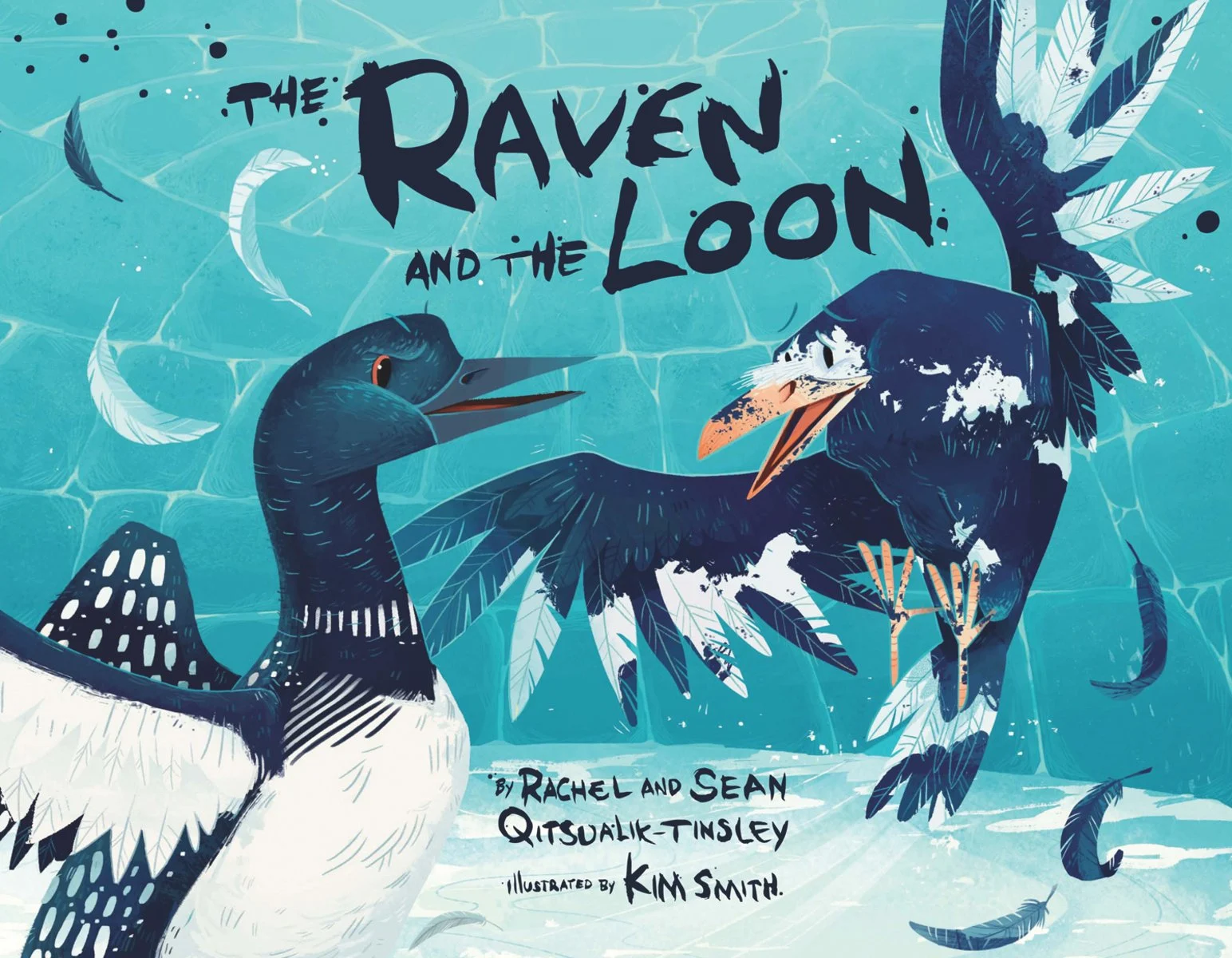
Get the book @ Bookshop
This Inuit origin story explains how the raven got its black feathers and the loon got its spotted pattern. It is a tale of pride, trickery, and consequences. It's part of a rich tradition of "pourquoi" tales (stories that explain why things in nature are the way they are), and it's a wonderful gateway into Inuit storytelling traditions and Arctic wildlife. The illustrations, inspired by Inuit art, are striking and worth discussing at length.
Discussion Questions
- Why did Raven and Loon end up looking the way they do at the end?
- What was the lesson of the story, what did Raven do wrong?
- Have you heard other stories that explain why something in nature looks the way it does?
- What do real ravens and loons look like? What's different about them?
Supplies
- White or cream cardstock
- Black and white washable paint
- Sponge daubers or cotton balls
- Black marker for details
- Reference photos of a real raven and a real loon (easy to find online)
- Look at the book illustrations together, then look up real photos of a raven and a loon. Talk about what makes each bird look different.
- Choose which bird to paint, or try both on the same page!
- For the raven: use the sponge to dab all black, then use white paint sparingly for any light highlights.
- For the loon: start with black, then add white spots by dabbing a smaller sponge or cotton ball dipped in white.
- Once dry, use a black marker to add an eye, a beak, and leg details.
- Write the bird's name at the bottom.
- Talk about contrast as you work: what happens when you put white dots on black? This is a real visual art concept!
- If your child asks why Raven was punished, let them sit with the question rather than rushing to answer. What do THEY think was wrong with Raven's behavior?
- Find the Arctic on a map or globe. What other animals live there? What is the land and weather like?
- Pourquoi tales exist in almost every culture. Do you know any "why" stories from your own family's background? Share them!
- Compare real bird photos: how do ravens and loons actually move, sound, and live? Raven calls in particular are fascinating to listen to.