
Boundaries, Hair, Conscent
Don't Touch My Hair!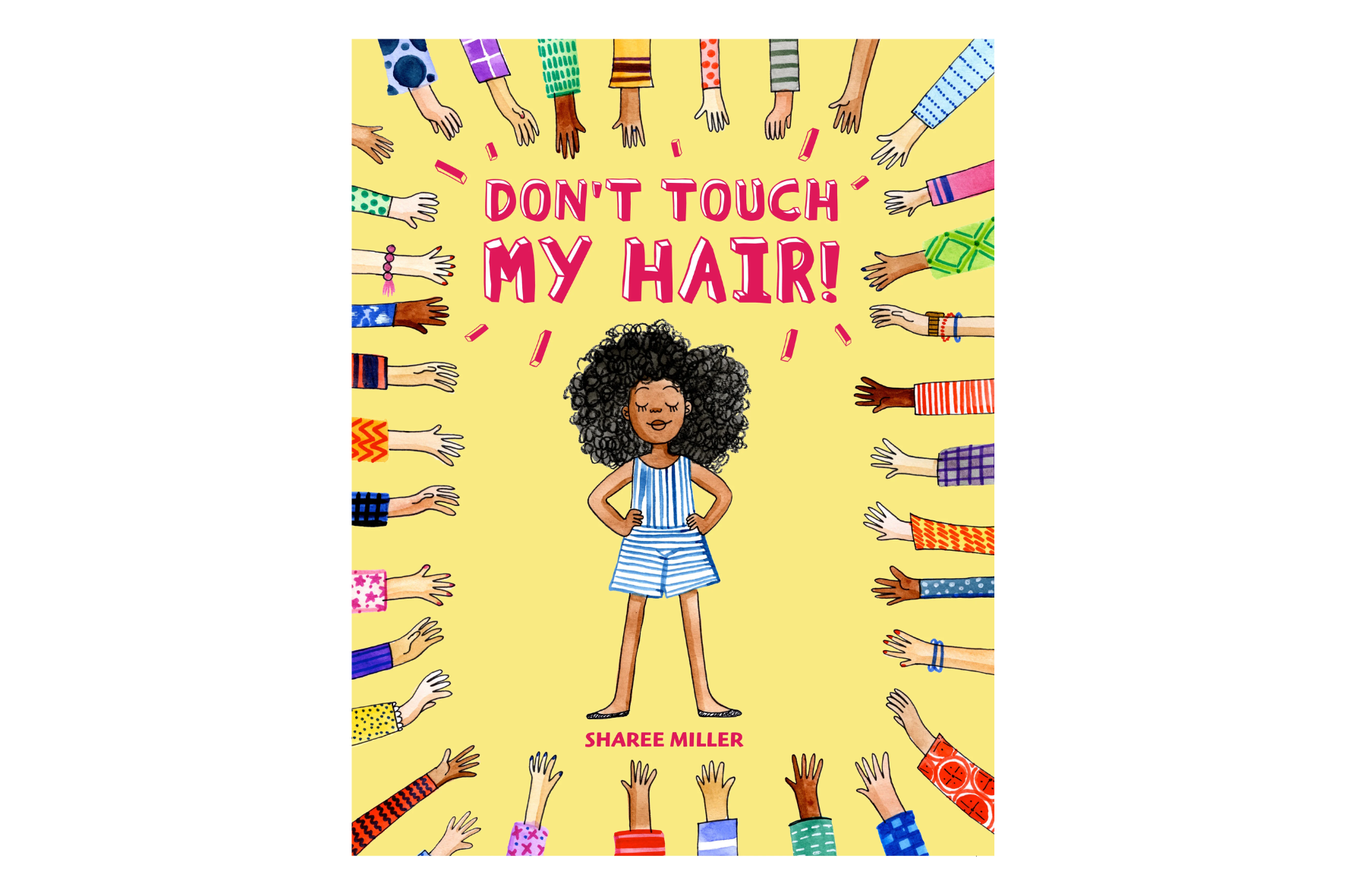
Purchase this book from Bookshop
This book handles bodily autonomy in such a direct, joyful, and age-appropriate way. Aria is tired of strangers reaching out to touch her hair without asking: even underwater, even in space! The absurd humor makes it easy for kids to access the very real message underneath: our bodies belong to us, and we get to decide who touches them. Essential reading for ALL kids, not just those with natural hair.
Discussion Questions
- How did Aria feel when people kept touching her hair without asking?
- Why is it important to ask before you touch someone?
- What makes your hair special to you?
- How do you feel when someone does something to your body without asking first?
My Beautiful Hair Self-Portrait
Supplies
- Paper with a simple face outline pre-drawn (PDF version here), or blank paper
- Yarn in various colors and textures
- Construction paper strips
- Glue
- Crayons or markers
Steps
- Look at your child's hair together in a mirror. Talk about it. What color is it? Is it curly, straight, coily, wavy? Does it have braids or twists or locs?
- Draw a simple face shape on paper (or use the provided outline)
- Choose yarn or paper strips that match (or celebrate!) their hair. Cut pieces together.
- Glue the pieces onto the top and sides of the face to create the hair.
- Draw in the facial features with crayons.
- Write or dictate one thing they love about their hair at the bottom.
- This is a great moment to be genuinely enthusiastic about your child's specific hair. The more specific the better. "I love how your twists catch the light" is more powerful than "your hair is pretty."
- If your child has a complex hairstyle, look at it together before starting and talk about how to represent it. This builds observational skills too.
- This book is a great opening to explain that sometimes people touch Black children's hair without asking because they see it as different or unusual and that is not okay. Black hair is not a curiosity. Every person's body deserves respect, and that respect should never depend on what someone's hair looks like or where their family comes from. If your child has experienced this, let them know it is not their fault, their hair is beautiful, and they are always allowed to say no.
- Practice the phrase "May I?" together in a role play. Who can they ask before touching? Who decides?
- Create a family "Hair Story" display. Everyone does a portrait and shares one thing about their hair.
- Read alongside other books celebrating diverse hair, like Hair Love by Matthew A. Cherry. The short film of it is below.